
Glass-like diffusion barrier
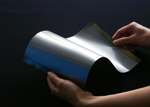

Barrier layer for flexible CIGS solar cells / Source: INM
Researchers at the INM have developed a barrier layer for flexible CIGS solar cells which separates the metal substrate from the absorber layer and so increases the efficiency of the metal-based solar cells. A wet chemistry spray process can then be used to apply it to flexible and rigid substrates with a variety of shapes.
The glass-like layer increases the efficiency of the solar cells in a different way. It acts as an iron diffusion barrier, preventing corrosion and oxidation of the substrate, explains Peter William de Oliveira, Head of the Optical Materials Program Division. At the same time, the barrier works as an insulating layer and reduces unwanted electrical currents from the absorber to the substrate. In addition, the coating is a source for the doping element sodium, which increases the efficiency of metal-based CIGS solar cells to 13 %. The new barrier layer also makes it possible to monolithically connect several cells on one and the same substrate to modules.
The glass-like diffusion barrier is applied to the metal substrate using the sol-gel process. It is transparent, flexible and only a few micrometers thick. A3 size films can be produced by dip coating and slit coating. For the further upscaling process, researchers at the INM then developed a method with which they can apply the coating via a spray process to large substrates with a variety of shapes. In addition, films up to 50 meters long and just under half a meter wide can also be coated using classic roll-to-roll processes.
Aktuelle Onlineartikel
-
26. 05. 2026 Schneller zur Bauteilsicherheit bei Verbrennungsprozessen mit Wasserstoff
-
20. 05. 2026 Biologisches Recycling von Elektroschrott zeigt großes Potenzial
-
11. 05. 2026 Fluorfreie Trockenbeschichtung für leistungsfähige Batterien
-
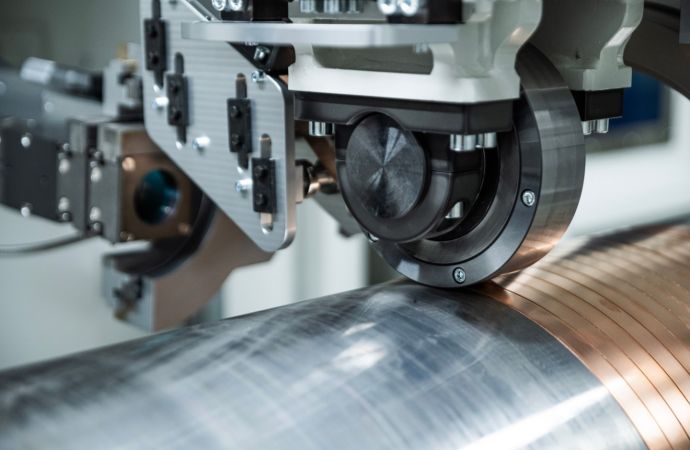
11. 05. 2026 Laserdirektplattieren senkt Taktzeit und Kosten für dicke Metallbeschichtungen
-
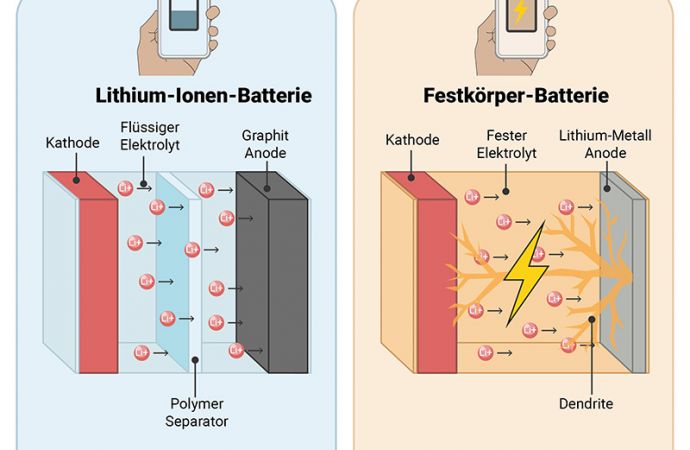
27. 04. 2026 Warum kommt es zu Kurzschlüssen in Festkörper-Batterien?
-
27. 04. 2026 Neuer internationaler Masterstudiengang „Battery Technologies“ startet zum Wintersemester 2026/27