
Novel Overheating Protection for Solar Thermal Systems


The Institute for Solar Energy Research Hamelin (ISFH) has been presented with an award for the development of a coating for solar collectors, which the firm of Viessmann is gradually to put on the market from the autumn of 2015. The jurors of the 25th Thermal Solar Energy Symposium awarded first prize to a poster contribution, which signalized a technological breakthrough for solar thermal systems.
The production method of the new absorber layer, which is based on vanadium, does not fundamentally differ from the processes for other selective layers. System costs vary within the same range as is currently usual. The Institute for Solar Energy Research Hamelin (ISFH) has been presented with an award for the development of a coating for solar collectors which the firm of Viessmann is gradually to put on the market from the autumn of 2015. The jurors of the 25th Thermal Solar Energy Symposium awarded first prize to a poster contribution which signalized a technological breakthrough for solar thermal systems. The Symposium, which takes places annually in Kloster Banz near Bad Staffelstein is, with over 300 participants, the most important German-language conference in this field.
The new coating, which absorbs solar irradiation has, under normal operating conditions, virtually the same technical characteristics as the currently-used highly-selective “blue” absorbers. As soon as a critical temperature is exceeded, however, the coating temporarily changes its function and emits excess energy as thermal radiation into its surroundings.
This technology resolves the problem with highly-selective “blue” absorbers of high stagnation temperatures, which has been known for ten years. If there is no need for heating in summer, conventional flat-plate collectors reach temperatures of over 200 °C. This means the solar circuit has to cope with very large changes in volume due to the resultant build-up of steam which occurs in such circumstances. Normally, expensive measures are necessary to control the build-up of steam during stagnation. In addition, the anti-freeze in the heat transfer medium has to be checked and replaced regularly as it deteriorates noticeably at temperatures over 180 °C. With the new technology, the stagnation temperature is reduced to 150 °C, without appreciably impairing performance in the usual range of a solar system.
The production method of the new absorber layer, which is based on vanadium, does not fundamentally differ from the processes for other selective layers. System costs vary within the same range as is currently usual. The higher material price of vanadium in comparison to the prevalent chromium leads to an increase in material costs of less than € 1/m2. Vanadium, like chromium, is used in large quantities in alloying steel. Its use in solar collectors is therefore not expected to lead to a shortage of the metal.
Aktuelle Onlineartikel
-
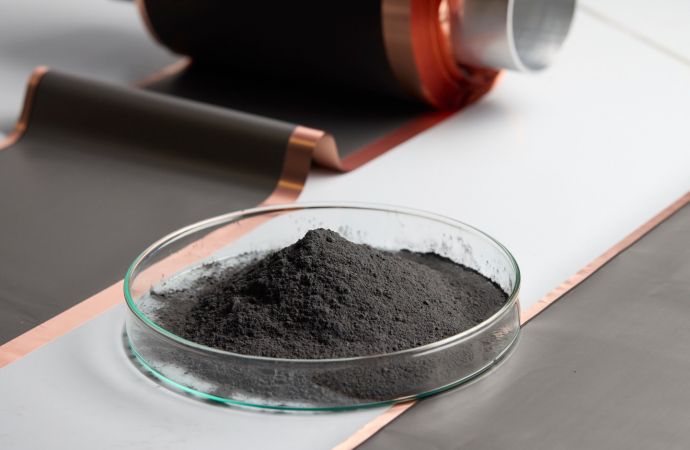
11. 05. 2026 Fluorfreie Trockenbeschichtung für leistungsfähige Batterien
-
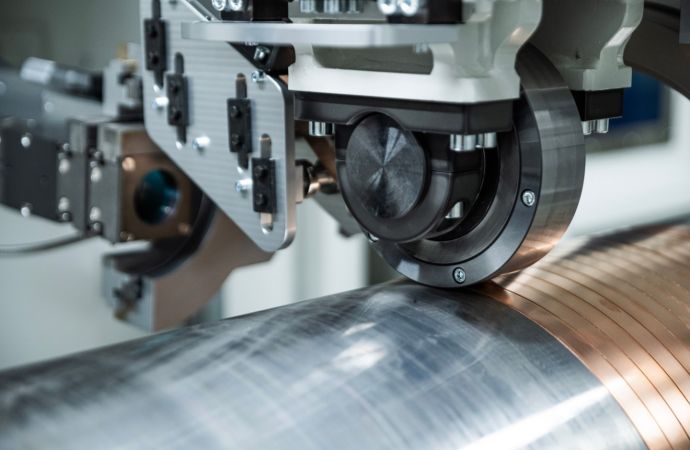
11. 05. 2026 Laserdirektplattieren senkt Taktzeit und Kosten für dicke Metallbeschichtungen
-
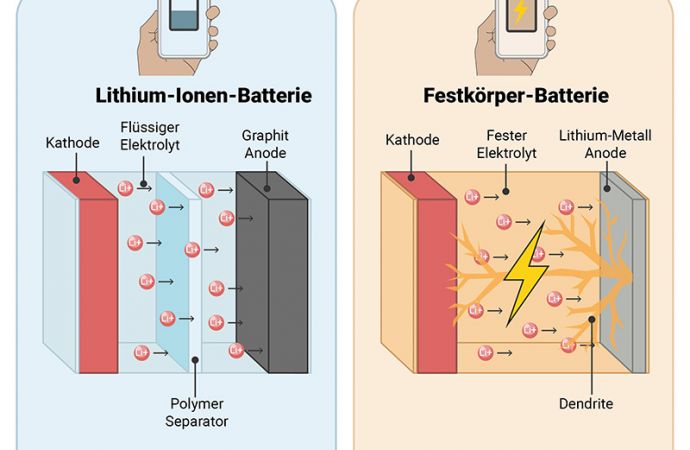
27. 04. 2026 Warum kommt es zu Kurzschlüssen in Festkörper-Batterien?
-

27. 04. 2026 Neuer internationaler Masterstudiengang „Battery Technologies“ startet zum Wintersemester 2026/27
-
27. 04. 2026 Nanofiltration – Wasser wirksam von Glyphosat befreien
-

22. 04. 2026 ZVO-Oberflächentage 2026 erstmals in Karlsruhe: Jetzt anmelden!