
Rapid prototyping methods for bio-based plastics
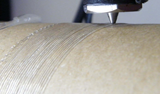

Extruding of the thermoplastic Bio-PU out of a 0.5 mm injector / Picture: Merseburg University of Applied Sciences / D. Glatz
Today rapid prototype parts are required in all areas and are vitally important for the product development process. The wide range of Rapid Prototyping (RP) procedures and thus the choice of the materials to be used are limited. As part of an R&D-project called FABIO (FAbrication of parts with BIOplastics) funded by the German Federal Ministry of Food and Agriculture (BMEL) through its project management agency, the Agency for Renewable Resources (FNR), scientists from Merseburg University of Applied Sciences have developed procedures and devices for processing bio-plastics using RP technology.
Specific values for the processing of the bio-plastics were determined by carrying out different analyses. The extrusion unit was developed to enable processing of all sizes of granulates. Temperature ranges are adjustable up to 300 °C. The necessary cooling facilities were taken into consideration. The Archimedes test equipment was well-suited to the development process. Different settings were tested using selected bio-plastics and any deficiencies disrupting the process could be remedied. Some complex and individual parts for the internal design of the equipment were produced on RP machines, belonging to the university. The rack could be provided with inside superstructures, among other things, changing devices, a heating system, a cooling system, a granulate material supply, a construction platform, and procedural units in an X-, Y-, Z direction. The interaction of control mechanisms and software could be tested, irrespective of the materials used.
The implementation of FABIO technology is imminent. FABIO technology makes it possible to choose from a wide range of thermo-plastic granulates such as Polyamide, Polyhydroxybutyrate, Polyurethane, Polylactide and starch. After successful completion of the project, the aim is to take the innovative idea, which was a spin-off from Merseburg University of Applied Sciences, and turn it into a service platform for prototype parts. See further information about the project on fnr.de under the menu Projekte & Förderung (FKZ 22007607).
Aktuelle Onlineartikel
-
11. 05. 2026 Fluorfreie Trockenbeschichtung für leistungsfähige Batterien
-
11. 05. 2026 Laserdirektplattieren senkt Taktzeit und Kosten für dicke Metallbeschichtungen
-
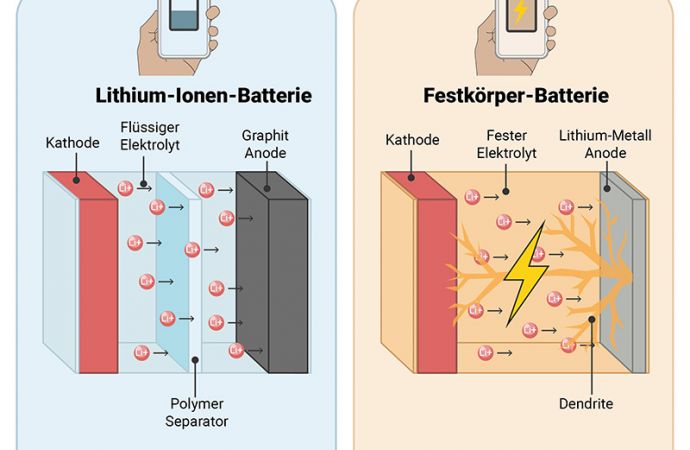
27. 04. 2026 Warum kommt es zu Kurzschlüssen in Festkörper-Batterien?
-
27. 04. 2026 Neuer internationaler Masterstudiengang „Battery Technologies“ startet zum Wintersemester 2026/27
-
27. 04. 2026 Nanofiltration – Wasser wirksam von Glyphosat befreien
-

22. 04. 2026 ZVO-Oberflächentage 2026 erstmals in Karlsruhe: Jetzt anmelden!