



An investigation was taken with the gas operated and gas cooled HVOF gun GTV TopGun Typhoon, which was developed by IBEDA in cooperation with the Composite Materials Group at Chemnitz University of Technology. It uses a convergent-divergent nozzle for maximum gas velocities, a swirl to constrict the gas stream inside the combustion chamber and is able to process powder and wire feedstock materials. The gun works with compressed air or nitrogen as cooling gas. In the present work, six different feedstock materials are used to optimize the coating quality through a parameter variation using the GTV TopGun Typhoon. The feedstock materials are four common powder feedstock materials (WC Co 88/12, Cr3C2 NiCr, NiCrBSi and AISI 316L) and two wire feedstock materials (17 % Cr-Steel and NiCr 80/20). Ahead of the primary parameter variation, a preliminary, material specific factorial design of experiment has been done to evaluate the correlations and variations between the process parameters. The varied process parameters are fuel gas flow, gas stoichiometry, cooling gas flow, feed rate, carrier gas flow and spraying distance. After the initial process screening, the parameters were optimized by using one-factor-at-a-time design-of-experiment to improve the deposition efficiency, coating porosity/morphology and degree of coating oxidation for each feedstock material.
Thermisches Spritzen mit der GTV TopGun Typhoon – Parameterentwicklung für Draht und Pulver
Untersucht wurde die mit Gas arbeitende und gasgekühlte HVOF-Spritzpistole GTV TopGun Typhoon, die von IBEDA in Zusammenarbeit mit der Arbeitsgruppe Kompositwerkstoffe der TU Chemnitz entwickelt wurde. Diese nutzt eine konvergent-divergent Düse für maximale Gasgeschwindigkeiten, eine drallbehaftete Kühlgasinjektion zur Einschnürung des Gasstroms in der Brennkammer und kann sowohl Pulver als auch Drahtmaterial verarbeiten. Die Pistole arbeitet mit Druckluft und Stickstoff als Kühlgas. In der vorliegenden Arbeit wurden sechs verschiedene Rohmaterialien verwendet, um die bestmögliche Schichtqualität mit der Spritzpistole zu erzielen. Dies waren kommerzielle Pulver (WC Co 88/12,Cr3C2 NiCr, NiCrBSi, AISI 316L) und zwei Arten von Draht (17 % Cr-Stahl, NiCr 80/20). Zunächst wurden die wichtigsten Parametervariationen in Abhängigkeit vom Spritzwerkstoff in einem DOE-Verfahren untersucht und qualifiziert. Die betrachteten Größen waren der Brenngasstrom, die Stöchiometrie, der Kühlgasstrom, die Rate an Spritzwerkstoff, der Trägergasstrom und der Spritzabstand. Nach den Voruntersuchungen folgte eine Optimierung der Parameter mittels DOE, bei dem jeweils ein Parameter verändert wurde. Ziel war die Verbesserung der Beschichtungseffizienz, der Schichtporosität- und -morphologie sowie der Oxidationsgrad für die verschiedenen Spritzmaterialien.
1 Introduction
The HVOF technology has established itself, particularly with increasing market shares in the specialized field of wear and corrosion protection [1, 2]. Subject of this investigation is the new HVOF system TopGun Typhoon. This is a gas-powered and air-cooled high velocity flame spraying gun which can process powder and wire feedstock materials.
The system was developed by the company IBEDA Gas und Sicherheitsgeräte GmbH & Co. KG, through a partnership with Medicoat AG and the Institute for Composite Materials at the Technical University of Chemnitz [3–5]. Since different powder materials behave differently in thermal spraying, a process parameter optimization has been conducted for each used feedstock materials in this study.
2 Experimental
2.1 HVOF-System TopGun Typhoon
The HVOF system TopGun Typhoon is characterized by a computational fluid dynamics and finite element method optimized combustion chamber, a Laval nozzle geometry and spraying particles reach calculated gas exit velocities of 1640 m/s [5]. The high flexibility of the system is based on the option to use propane or ethane as fuel gas and the possibility to change between powder and wire materials. The feedstock material enters axially in powder or wire form into the combustion chamber. Additional flexibility is added by being able to process compressed air or nitrogen as cooling gas. Figure 1 shows the schematic design of the gun.
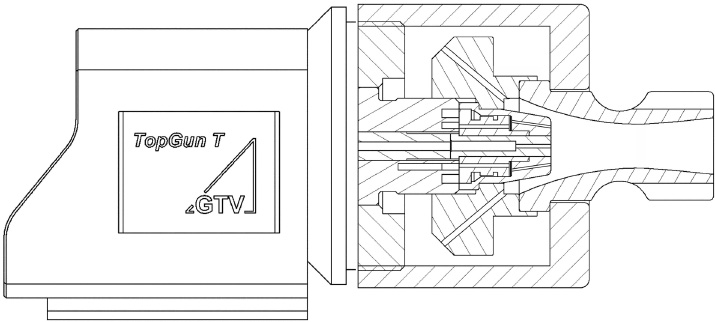
Fig. 1: Schematic design: GTV TopGun Typhoon
2.2 Feedstock materials and test methods
In this work, the following feedstock materials have been used: powder feedstock materials, WC-Co 88/12, Cr3C2/Ni20Cr75/25, NiCrBSi, stainless steel (316L) and wire feedstock materials, 17 % Cr-steel and NiCr 80/20. The respective grain fraction, the wire diameter and the method of production are shown in Table 1.

The investigation of the spray parameters was primarily executed by the measurement of particle temperatures and velocities, optical microscopy of cross-sectional images and the measurement of the deposition efficiency. The determination of the deposition efficiency was done gravimetrically according to DIN EN ISO 17836 on grit blasted steel plates with dimensions
300 mm x 300 mm x 3 mm. The motion control of the gun was executed by the 6-axis robot system Kuka KR-16-2.The characterization of the spray jet was carried out by the NIR (Near Infra Red) sensor system from GTV. The particles are actively illuminated by a 10 MHz-NIR diode laser and the speed of individual particles can be determined by the flight time when passing through the measurement window. The detection of the particles temperatures was done via a beam splitter and two high-speed pyrometers, which allow calculating the temperature on the basis of the different intensity levels. Figure 2 shows the schematic design of the measuring system and illustrates the measurement principle.

Fig. 2: Schematic design of NIR-Sensor measurement principle
Additionally the wire melting behavior was examined with a high speed camera of the company Exilim whose CMOS sensor is designed for shutter speeds down to 0.025 ms. The analysis of the coating morphology was done by coating round C45 steel specimens (40 mm diameter, 10 mm height), which were sand blasted with grit 40 corundum prior to the thermal sprayed coating. Afterwards the specimen were hot mounted and grinded with three steps of SiC-paper (320, 600 and 1000 grit) and polished with diamond suspension (9, 6 and 1 micron). The microstructure was examined by an optical microscope made by Jenavert. The determination of the porosity and the degree of oxidation was conducted by the image analysis program Vision Lite of Clemex. The measurement of the Vickers hardness was carried out with the hardness tester FM 300 of Future Tech according to DIN EN ISO 4516. Additionally, wear tests were conducted for selected parameters sets. The wear rates were determined gravimetrically by using Taber Abraser Model 505 Dual Abrasion Tester (Taber Industries) using the SiC abrasive wheels H 10.
2.3 Methodical Approach
The efficiency of design of experiments for process optimization in HVOF process has already clearly been shown by Tillmann et al. [6]. This investigation uses a linear, two-and orthogonal experimental design after the Yates standard (25-1). The resolution is class V, which means that the main effects and interactions are separated and can be uniquely assigned. At first the system boundaries have been determined by following the principle of one factor at a time and afterwards a design of experiments was set up for the screening of the process. The main effects for the powder feedstock materials were determined by using design of experiments with the response functions particle velocity and particle temperature. By comparing the materials WC-Co and Cr3C2/NiCr, it becomes obvious that the identical grain fraction and powder morphology result in similar effects on the particle velocity. However, the main effects for particle temperature differ between WC-Co and Cr3C2 NiCr. The isolated view on the influence of the particle temperatures only permits limited conclusions on the resulting coating morphology und higher particle velocities have a positive effect on coating properties such as porosity, hardness and bonding strength. Therefore the particle velocity was chosen as the parameter for the target optimization and further experiments (Tab. 2).

Subsequently, specimens were coated with these starting parameter sets for the analysis of the coating morphology by optical light microscopy. After that selected parameters were varied by one factor at a time to determine the effect on the coating characteristics. As part of the process characterization of processing the wire feedstock materials, the optimal wire feed rate was determined by the analysis of the wire melting behavior. Too low wire feed rates lead to premature melting of the wire inside the Laval nozzle, which greatly increases the nozzle wear due to material buildup. An adjusted wire feed rate enables a homogeneous wire melting behavior with a continuously tapered wire tip, which begins behind the outlet from the Laval nozzle.
3 Results
3.1 Powder Feedstock Material WC-Co
Three main factors that influence the WC-Co 88/12 coatings quality were clearly identified during thermal spraying of WC-Co 88/12 powder. This correlates with the measured particle velocities. Main factor is the amount of fuel gas. The coating porosity significantly reduces with increasing the fuel gas amount. The other two factors are the powder feed rate, and the carrier gas flow, whose decrease also results in denser coatings. Figure 3 shows the porosity as a function of these three variables and the corresponding velocity measurements of the NIR sensor.
The influences of the lambda value, the oxygen gas ratio and medium of cooling gas is negligible. The measured deposition efficiencies are in the range between 66 % and 85 %. Figure 4 shows the morphology of the optimized WC-Co 88/12 coating.

Fig. 3: WC-Co 88/12 – Porosity and particle velocity as a function of the ethene flow, carrier gas flow and feed rate

Fig. 4: Morphology of the optimized WC-Co 88/12 coating
3.2 Powder Feedstock Material Cr3C2/NiCr
The main factors affecting the coating formation for Cr3C2/NiCr as feedstock are the amount of fuel gas and the lambda value. Critical coating properties such as porosity, hardness and deposition efficiency depend primarily on these two parameters. An increase in the amount of fuel gas reduces the coating porosity and increases the deposition efficiency. The reduction of the lambda value increases the flame temperature due to the substoichiometric combustion and has a positive effect on the coating porosity while the deposition efficiency does not change by varying the lambda values. Figure 5 shows the porosity and the deposition efficiency as a function of the lambda value and amount of fuel gas for the powder material Cr3C2/NiCr.

Fig. 5: Influence of the lambda value and the fuel gas flow on the porosity and deposition efficiency of Cr3C2/NiCr coatings
In addition it was found that higher powder feed rates and increased spray distance also have positive influence on the porosity and the deposition efficiency. Limiting factor is the capacity of the system, which is only capable to convey powder up to a critical value due to the high pressure inside the combustion chamber. Furthermore the experiments have shown that an optimal bonding to the substrate can only be achieved with the maximum fuel gas flow rate of 140 l/min. Figure 6 shows the coating morphology and bonding by applying the optimized parameter set.

Fig. 6: Cr3C2/NiCr – Coating morphology and bonding of an optimized parameter set
3.3 Powder Feedstock Material NiCrBSi
During the investigation of the main influences while processing NiCrBSi only minor trends in the coating properties such as porosity, deposition efficiency and hardness can be observed. While altering the fuel gas flow between 100 and 140 l/min, standoff distance between 150 and 300 mm, stoichiometric value lambda between 0.8 and 0.9, powder feed rate between 60 and 80 g and carrier gas between 15 and 20 l/min the deposition efficiency only varied between 78 % and 83 %, the porosity between 2.6 % and 6 % and the hardness between 644 HV0.1 and 663 HV0.1. Figure 7 shows the optimal parameter set for the lowest porosity and the highest deposition efficiency.

Fig. 7: NiCrBSi – Optimized parameter set for low porosity and high deposition efficiency
3.4 Powder Feedstock Material 316L
For the investigation of the feedstock material 316L in powder form both possible cooling gases (air and nitrogen) are used to determine the influence on the oxide content of the sprayed coatings in addition to the variation of process parameters. For the examined parameters, the porosities ranged between 0.2 % and 4.5 % and the deposition efficiency 45 % and 66 %. However, it has not been possible to identify significant factors that influence the porosity and deposition efficiency. It is possible to generate coatings with low porosity (0.2–0.7 %) and high porosity (4–4.5 %) with high and low fuel gas flows. The same holds true for the lambda value, the amount of cooling gas, the feed rate and the standoff distance.
The degree of oxidation of the layers is influenced by two factors. The primary factor is the flame temperature, which can be controlled by the amount of fuel gas flow in combination with the lambda value. Both determine the melting behavior of the particles [7]. High flame temperatures result in fully molten particles, which deposit in a fine lamellar structure during the coating formation. However, this promotes the formation of oxides due to the large specific surface area. At low flame temperatures, the spray particles are not completely molten, have a spherical surface during the flight/deposition and are only oxidized to a small amount. Figure 8 shows the coating morphology with a high flame temperature.
The second factor is the type of cooling gas. The use of nitrogen as cooling gas can additionally reduce the oxide formation. However, it is worthy to note that using nitrogen cooling gas decreases the deposition efficiency. Figure 9 shows the influence of the cooling gas medium on the oxide content of the coating.

Fig. 8: 316L – Coating morphology with a high flame temperature parameter set

Fig. 9: 316L – Influence of the cooling gas (nitrogen) on the oxide content of the coating
3.5 Wire Feedstock Material NiCr 80/20
The optimal feed rate for a starting parameter set was determined prior to the processing of the wire feedstock materials to ensure an optimal wire melting behavior with low spray divergence. Subsequently, the analysis was based on the assessment of the coating surface quality and morphology. The coated specimen showed that large wire pieces were included in the coating even with an adjusted wire feed rate and a continuously tapered wire tip. No parameter set which prevented inclusions in the coating could be identified by varying the wire feed rate. Figure 10 shows by means of cross section images the coating morphology, the inclusions in the layer and the corresponding wire melting behavior when using a NiCr 80/20-wire.
However, the coatings show a very low porosity (0.1–0.36 %), have a good bonding to the substrate and a fine lamellar structure while varying the wire feed rate. Parameter set B shows that the tip of the wire widens at the end and molten particle are sheared off uncontrollably (second row, Fig. 10). This is due to the change in pressure within the free jet of the HVOF flame. The pressure rises in the first shock node and forces the molten wire backwards.
Figure 11 shows the example of this behavior with a NiCr 80/20-wire and for clarification with an aluminum-silicon flux-cored wire. It is obvious that the wire pushes through the initial shock nodes at a high feed rate (number 1 in Fig. 11) or the molten particles get pushed back at a low feed rate (number 2 in Fig. 11).
With parameter set A, however, the high speed camera recordings indicate that the inclusion inside the coatings are torn off pieces of wire which are detached from time to time at the end of the wire tip and are not sufficiently atomized during the flight due to the lack shear forces. Figure 12 shows this behavior on the basis of the high-speed recordings.

Fig. 10: Coating NiCr 80/20 morphology, inclusions and wire melting behavior

Fig. 11: Influence of the shock diamonds on the wire melting behavior

Fig. 12: NiCr 80/20 – wire melting behavior at high feed rates
3.6 Wire Feedstock Material 17 % Cr-Steel
The investigation of 17 % Cr-steel was also started with the analysis of the wire melting behavior. After the adjustment of the wire feed rate, the analysis was based on cross-sections of the created coatings. It was found that the high surface roughness can be attributed to the formation of oxide nests and not for the uncontrolled melting of the wire. The applied layers have a low porosity between 0.3 % to 0.9 %, a fine lamellar structure and good bonding to the substrate, which is dependent on the amount of fuel gas. In addition to the very high density of the coatings, the deposition efficiencies are in the range between 75 % to 81 %. The oxide content of the coatings and, consequently, the size of oxide nests are determined primarily by the amount of fuel gas and the stand-off distance. However, the influence of nitrogen as a cooling gas brought only a slight improvement regarding the oxide content. Figure 13 shows a 17 % Cr-steel coating, which was sprayed with compressed air as the cooling gas.

Fig. 13: 17 % Cr-Steel – coating morphology with compressed air as cooling gas
3.7 Comparison GLC – Typhoon
Finally, comparison of the burner systems TopGun Typhoon and GTV GLC regarding the progress coating porosity, coating hardness and wear resistance has been conducted. The comparison of the porosity shows that as the gas-powered and air-cooled Typhoon system does not reach the value of the kerosene-operated and water-cooled K2-system, but achieves better results than the GTV GLC system. It should be noted that the air-cooled GTV GLC system can only be operated with a maximum fuel gas flow of 90 l/min. Figure 14 shows the lowest achieved porosities of the different systems.
When comparing the maximum hardness values obtained it can also be seen that the values of the Typhoon range between the two other systems or slightly above that of the GTV GLC (Fig. 15).

Fig. 14: Comparison of the lowest achieved porosity

Fig. 15: Comparison of the maximum hardness
The conducted Taber Abraser wear tests have shown that the coatings of the Typhoon system for Cr3C2/NiCr and 316L show lower wear rates than the GLC system. The wear rates of the powder feedstock materials WC-Co and NiCrBSi only show very little difference while being processed by the two systems. Figure 16 shows the wear rates while using the Typhoon and GLC system after 10,000 cycles.

Fig. 16: Comparison of the wear loss after 10,000 cycles
4 Summary
The gas-operated and air-cooled system GTV TopGun Typhoon is capable of handling the powder feedstock materials WC-Co, Cr3C2/NiCr, NiCrBSi and 316L reliably. The Typhoon system is unique in the field of air-cooled high velocity oxygen fuel guns due to its flexibility in terms of the maximum possible fuel gas flow, the selection between different fuel gases and the possibility to change between the cooling gases compressed air and nitrogen as well as the possibility to process wire materials. The achievable coating properties such as porosity and hardness are to settle slightly below those of kerosene-powered and water-cooled guns like the GTV K2, but the GTV Typhoon performs at higher deposition efficiencies due to the higher flame temperatures.
Spraying the wire materials has clearly shown that the materials behave differently while being processed by a HVOF system. Even if it was possible to easily apply coatings with the 17 % Cr-steel wire it was not possible to get a sufficient coating quality with NiCr 80/20-wire with respect to the avoidance of inclusions within the
coatings.
References
[1] K. Nassenstein, A. Schwenk, A. Wank, B. Wielage, G. Paczkowski: Fortschritte in der HVOF Beschichtungstechnik durch GTV (Advances by GTV in the field of HVOF coatings); Tagungsunterlagen 7. HVOF-Kolloquium, Nov 09–10, 2006 (Erding), 2006
[2] Deutscher Verband für Schweißen und verwandte Verfahren e. V.: Thermisches Spritzen – Potentiale, Entwicklungen, Märkte (Thermal spraying – potential, developments, markets); DVS Berichte, Band 245, 2007, in German
[3] B. Wielage, C. Rupprecht, G. Paczkowski, R. Menzen, G. Weissenfels, H. U. Bernhardt, M. Runkel: A new way in HVOF technology – CFD optimized TOPGUN AIRJET for powder and wire; Proceedings of the International Thermal Spray Conference, Jun 02–04, 2008 (Maastricht), 2008
[4] B. Wielage, C. Rupprecht, G. Paczkowski, K. Lande, J. Schein, S. Zimmermann, R. Menzen, G. Weissenfels: CFD optimized nozzles for increased particle velocities and lowered gas consumption in the HVOF spraying process; Proceedings of the International Thermal Spray Conference, May 04–07, 2009 (Las Vegas), 2009
[5] G. Weissenfels, R. Menzen, C. Rupprecht, G. Paczkowski: Industrielle Einführung neu entwickelter HVOF-Systeme von IBEDA (Industrial implementation of newly developed HVOF systems by IBEDA); Tagungsunterlagen 8. HVOF Kolloquium, Nov 05–06, 2009 (Erding), 2009, p 85–93
[6] W. Tillmann, E. Vogli, I. Baumann, G. Kopp, C. Weihs: Statistical design of HVOF spray experiments to manufacture superfine structured wear resistant Cr3C2 25(Ni 20Cr) coatings; Proceedings of the International Thermal Spray Conference, May 04–07, 2009 (Las Vegas), 2009
[7] W. Krömmer, P. Heinrich: Einfluss der Gase beim Thermischen Spritzen (Influence of Gases in Thermal Spraying); Tagungsunterlagen 8. HVOF Kolloquium, Nov 05–06, 2009 (Erding), 2009, p 117–121
DOI: 10.7395/2013/Ruether1